
We Are Successfully Getting Aid Into Gaza. Here’s What the World Doesn’t See.
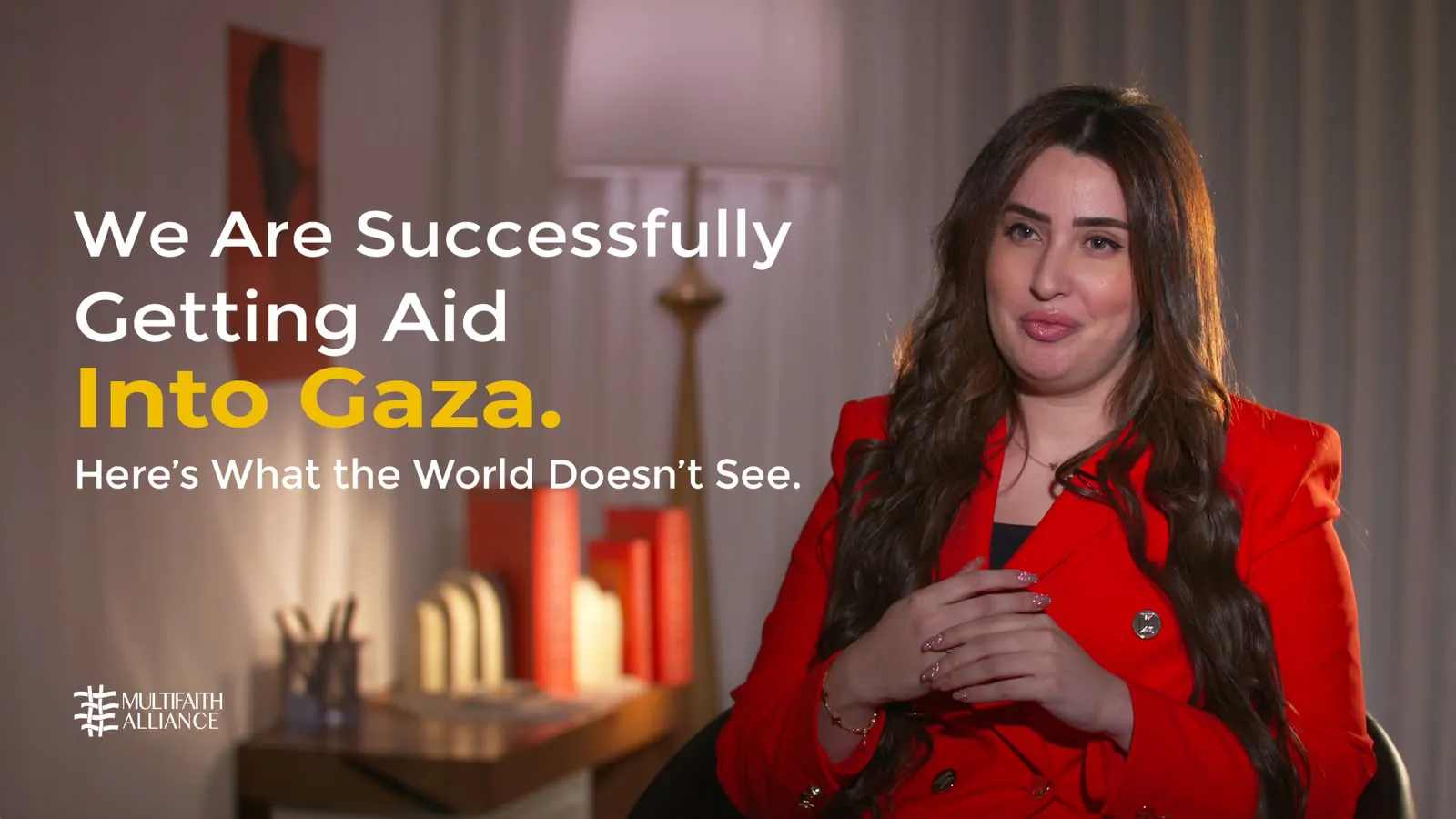
I wasn’t supposed to be in that room. A few months into the war, I was ushered into a meeting with an important decision maker in the Israeli army—a man who had refused to meet with any Palestinian. He began by declaring that “everyone in Gaza is Hamas.” I pushed back. He argued. I argued harder. Finally, exhausted, he waved toward his assistant: “Fine. Just get her a meeting on Sunday.” That reluctant sentence became the first plank in a bridge neither side believed could hold.
Building Human Architecture Where None Existed
I am a Palestinian from East Jerusalem. I run humanitarian operations for the Multifaith Alliance, one of only eight entities approved to bring aid into Gaza through Israeli crossings. Since September 2024, we’ve delivered more than 1,300 trucks to 1.35 million people. Not one has been looted.
People assume our success means outsmarting a broken system. But it’s the opposite. It means building a system where none exists—a coalition of people who may not trust each other, but need each other just enough to keep families alive.
“Aid moves because of relationships, accountability, and a level of consistency that is typically impossible.”
Three Words That Open Doors
On our way into Gaza, we start by passing the Israeli border, and after it the harder part of the challenge starts. Three words are the solution:
“We’re with Multifaith.”
At the border, Israeli officials let our shipments pass. Armed groups that raid other convoys wave them through. Our system works. And that system isn’t magic—it’s human architecture:
- Palestinian field teams who know every alley, every family, every risk.
- Israeli liaisons who verify each truck reaches the right school, tent, or clinic.
- Community elders who organize orderly distribution lines.
- Volunteers who rotate daily to prevent favoritism or pressure.
- International partners supplying nutrition, medicine, and winter shelter.
Dignity Responds to Dignity
You’ve seen the images of chaotic distributions in Gaza—crowds sprinting toward trucks, people climbing over each other. Those images have come to define Palestinians. But they don’t define the Gaza I see. In our distributions, people line up. They wait. They trust.
High officials have called asking how. The answer is simple: When you design a system that treats people with dignity, they respond with dignity.
I tell Gazans, and our staff, that they are heroes, not victims. But the heroism here is collective. It’s the teacher rebuilding a classroom in a tent because we secured pencils that week. It’s the supplier inside Israel who sells goods at cost so families have shoes for winter. It’s the father who waits calmly in line to feed his son. It’s the Israeli soldiers who help ensure we make it through the crossing despite the risks.
The Cost of Bridge-Building
None of this makes the work safe. I’ve received death threats from multiple directions. Diaspora Palestinians accuse me of “engaging” with the other side. Some Israelis see my ethnicity before my commitment to working alongside them. Everyone wants to project their politics onto the work.
But when distribution lines stay orderly in a war zone, when more than 1,300 trucks cross without being looted, when a million people receive aid—achievements most large UN agencies cannot claim—it’s because a fragile bridge held together for one more day.
Shaping Who Gaza’s Orphans Become
And now the stakes are far larger. Sixty thousand children in Gaza have lost every family member. After the 2014 war, there were 6,000 orphans. Some grew up angry, rootless, and manipulated—many of whom participated on October 7th. Now there are ten times as many. If we don’t reach them, someone else will.
We are building a safe space for 200 orphaned children—a drop in the bucket, but a beginning. Humanitarian aid isn’t only about survival now. It’s about shaping who these children become in ten years, in twenty. It’s the resilience of people to come towards one another despite everything that has transpired.
Consistency Is a Miracle
People think this work is about logistics: trucks, manifests, crossings. But it is just as much about forging a coalition across political and religious fault lines, held together not by agreement, but by necessity and the belief that dignity is still possible.
Consistency sounds boring. In Gaza, consistency is a miracle.
— Sarah Awaidah, Executive Director, Gaza Humanitarian Operations, Multifaith Alliance


Comments
Share your thoughts. Comments require admin approval before appearing.
Leave a Comment