
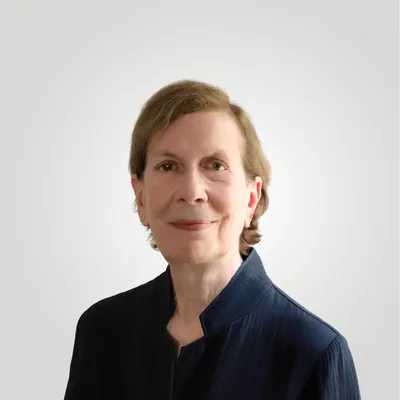
Advocacy in Action: A Conversation with Betsy Dribben, MFA's Head of Advocacy

For humanitarian organizations, delivering aid on the frontlines is only half the battle; confronting the political and systemic obstacles around that aid requires an unyielding voice in the halls of power.
Advocacy on Capitol Hill: Connecting Humanitarian Relief with Policy
What does your advocacy work involve, and how does it connect to MFA's objectives? Has that changed over time?
Advocacy for a humanitarian organization covers a lot of ground. The work is international, but my focus is domestic. I work at the national level, and that work has international consequences.
Take Syria as an example. The war there went on for 14 years. When we started out, we didn't do advocacy on the Hill. But Dr. Georgette Bennett realized you can't just do the humanitarian work without confronting the problems around it. One of those problems was Islamophobia. There was a growing belief that Muslims not only didn't belong in the U.S., but were causing problems worldwide. People on the Hill were talking about Muslim bans, even before the Trump administration. Congress needed clarity about where this was coming from and how harmful it was. That was one of the first areas we focused on.
We also needed to be on the Hill to talk about humanitarian funding. We were raising money from a range of donors, but Congress was dealing with budgets for military funding and all kinds of related issues, and we needed a voice there. So we set up an advocacy program. We didn't start out that way, but it became clear that to be as effective as possible, you need a voice in politics, not just in programs.
“It became clear that to be as effective as possible, you need a voice in politics, not just in programs.”
My work has changed a great deal over the years. During the war, one thing we could do was bring clarity to what was happening. We were delivering aid into Syria but couldn't be there ourselves. We could still get information out, often faster than the State Department, so we became a trusted source of information.
We became part of a remarkable program, Operation Good Neighbor, working with the Israel Defense Forces through Georgette Bennett's contacts and with Syrian NGOs. We shipped aid by sea to Israel, where there were no tariffs or import duties. It then went into Syria to well-vetted Syrian NGOs. Georgette would describe it as soft diplomacy. Israelis and Syrians who had seen each other as enemies found common ground. The program was so successful that the House and Senate introduced a bipartisan, bicameral resolution praising Operation Good Neighbor and Multifaith Alliance's role. It didn't pass, as a lot of things don't, but it raised awareness that countries in the middle of a war can find common ground and deliver humanitarian aid.
Across different administrations we've worked with the State Department and the Executive Branch as issues came up. Recently, we contributed to an Amicus brief for a Supreme Court case on the Temporary Protected Status for Syrians. In April, the Court took up whether to continue TPS for Syrians and Haitians. Even though Syria is no longer at war, living conditions there are still very hard.
Notable Milestones and Realities: From Caesar Sanctions to Hill Frustrations
What have been your most notable successes and your biggest frustrations?
One success was the bipartisan resolution recognizing the unique relationship among Israel, Syria, and the Multifaith Alliance. Another was the recent lifting of the Caesar sanctions. These were very strong sanctions on Assad, his inner circle, and others. Once the war in Syria ended, the goal was to remove them to help boost the Syrian economy.
President Trump had the authority to lift a range of sanctions. When he met with al-Sharaa, he expressed support for him and for the new Syria, and he lifted many sanctions. But he didn't have the power to lift the Caesar sanctions. That had to come from Congress. It was a slow process, and there was skepticism. Some members of Congress are still very skeptical of al-Sharaa because he was once a military commander. They say he's “ISIS in a business suit.” So it took time, but getting the Caesar sanctions lifted was a major coalition success that we were part of. Those are two very different wins: the Caesar sanctions, and our own work being recognized by Congress.
As for frustrations: a member of Congress once pointed out to me that in earlier eras, you would see religious leaders on the Hill in their religious garb, whether they were rabbis, ministers, or priests. Seeing religious leaders lobbying on issues had a real impact. You don't see that much anymore, and I don't just mean our issues. Fewer religious leaders seem to lobby the Hill today.
The other frustration is that you're dealing with a wide range of views on everything. We work in coalitions, and we work well in them, but every group has its own view of how things should be done. So you have to negotiate and find common ground on how to move forward. It isn't an overwhelming frustration. But sometimes our position isn't quite in step with another group's, and you have to strike a balance so the coalition works, which is important.
Inside the Daily Work: Policy Tracking, Rebuilding, and the Captagon Threat
What does your role look like day to day, or over a week or a month?
I monitor the issues we're working on. That might be the National Defense Authorization Act (NDAA) or funding going to Syria. I also flag developments internally that may affect us. I monitor all kinds of media. The other day, for example, I shared an article about the Syrian government announcing a more formal process for rebuilding homes. We are involved in rebuilding programs, and the article explained the new procedures in detail. Sometimes I'm flagging possible donors: a group announcing new funding, or someone making a speech or statement about an issue relevant to us.
We also serve on a task force on the drug Captagon. You might wonder why the Multifaith Alliance would care about a drug. During the Assad years, Captagon, a fenethylline-based drug that started out as a treatment for attention deficit disorder, turned into something else. It's a very cheap drug used throughout the Middle East. You lose your appetite, you gain focus, and you can go long stretches with high energy. Assad turned Syria into a narco-state. He made over a billion dollars manufacturing Captagon, and it has been very disruptive across the Middle East and beyond.
Why does that concern us? If Assad is making a billion dollars, he can get around the Caesar sanctions and other sanctions the U.S. placed on him and his circle to try to hold him accountable for a war in which he committed so many war crimes. The task force includes Hill staff, a member from CENTCOM, the DEA, and many others looking at this issue. Captagon has now spread far beyond the Middle East and is destabilizing, so we take part in that work.
The Interfaith Advantage: Shared Morality Across Traditions
What are the benefits and possible drawbacks of interfaith coalition work?
I think the benefits are very clear. Every faith teaches helping those in need and helping the stranger. Georgette often speaks about this. Somewhere in every faith's teachings, there's a shared commitment to helping refugees. That's vital, and it shouldn't be lost.
“Somewhere in every faith's teachings, there's a shared commitment to helping refugees. That's vital, and it shouldn't be lost.”
Multifaith Alliance is unique. There's Catholic Charities, there are Episcopal charities, there's Lutheran work, and many Jewish groups, like HIAS, do excellent work. But we span the full range of faiths, and these are issues, concerns, and ethics that cross every religious tradition.
A Decade of Conviction: What Keeps Me Going
Finally, why does this work matter to you personally? What got you into it, and what keeps you going?
I've been doing this for 10 years. I believe one person can make a difference, and I work with people who have been very brave in their own lives.
There's Shadi, who ran a hospital literally underground and was warned by the Assad regime to stop saving lives, because they weren't shooting people so that he could save them. There's Ahed, who was an accountant. When the war started, her family left, but she chose to stay and became an emergency medical technician to save lives. I find that inspiring.
It's very important work: helping refugees and bringing aid to people torn apart by war. I've spent time in war zones, in Bosnia, Kosovo, and Iraq, and in refugee camps. So I have some modest firsthand experience of how hard their lives are. It's really the luck of the draw that I'm where I am and another person is in that very difficult situation. I find great satisfaction in doing this work, and feel lucky in having this opportunity to help.
“It's really the luck of the draw that I'm where I am and another person is in that very difficult situation. I find great satisfaction in doing this work, and feel lucky in having this opportunity to help.”
— Betsy Dribben, Head of Advocacy at Multifaith Alliance

Comments
Share your thoughts. Comments require admin approval before appearing.
Leave a Comment