
Economic Recovery Series — MFA is expanding its focus on economic recovery and resilience for the people we serve. Through this blog series, we will elevate diverse voices whose experience and leadership can inspire and inform the work ahead, while sharing our own journey along the way.
Fourteen years of running microfinance across Iraq, Lebanon, Palestine and Jordan taught me that credit is not a later stage of recovery. It is part of the infrastructure of recovery itself, and Syria is where that proposition is now being tested.
Fourteen Years Across Four Markets
I spent fourteen years, from 2011 to 2025, leading Vitas operations in Iraq, Lebanon, Palestine and Jordan. The group's oldest company, Vitas Iraq, began in July 2003 as a programme of CHF International and was the first non-profit microfinance institution in the country, and it came to hold more than 60 per cent of the market. It remains the largest microfinance institution in Iraq, while the Vitas companies in Lebanon, Palestine and Jordan each ranked as the second largest MSME lender in their markets. As a group, Vitas has disbursed over US$3 billion since inception; these figures are from my own years leading it.
Three characteristics explain how those companies performed through repeated crises. The first is that Vitas targeted the middle market, the segment that sits between microcredit and bank-financed small enterprises, and the hardest segment to serve because its borrowers are too large for poverty lending and too informal for banks. The second is that the staff were one hundred per cent local in every country. The third is that resilience was built into the business plan itself rather than into a business continuity annex; pivoting products, branches and funding through political, economic and security shocks was treated as a normal operating condition.
Those years left me with a conclusion the humanitarian system has still not fully absorbed. Access to finance is not a later stage of recovery that begins once stability arrives; it is part of the infrastructure of recovery itself, as basic as roads and power. Syria is now the place where that proposition will be tested, and whether it succeeds there will turn on three issues: the borrowers, the governance around them, and the people who run the institutions.
The Borrowers: Need Rises Exactly When Credit Withdraws
In every war or crisis formal credit dries up at the moment demand for it peaks. Banks retreat to government paper or close their lending books entirely, and even supplier credit disappears. Households and small firms, who need capital to repair a home, restock a shop or restart a workshop, are pushed to moneylenders or to nothing. The withdrawal of credit is therefore itself a driver of poverty, separate from the destruction that caused it.
Lebanon demonstrated this at national scale when its banking system collapsed in 2019. Depositors lost access to their savings and commercial credit evaporated, while inflation reached 171 per cent in 2022, according to Lebanon's Central Administration of Statistics, and stayed in triple digits into 2023. Syria's trajectory has been longer but points the same way. The pound went from around 47 to the dollar before the conflict to roughly 13,000 today, with inflation estimated at 27 to 35 per cent annually through 2023 and 2024, according to a study by Syria's Planning and Statistics Commission. Syrian inflation has since cooled to around 10 per cent in the first quarter of 2026, and stability of that kind creates the conditions in which a lender can operate responsibly. Currency risk remains, however, and an entrant will need to manage the mismatch between hard-currency funding and lending in pounds. The unmet demand is structural: analysis by the Middle East Institute puts customer lending in Syria at roughly 4 per cent of GDP, with an estimated 90 per cent of small firms borrowing informally.
The perceived risk of these borrowers is far higher than the realised risk. While a portfolio deteriorates during war, the institution recovers if it is designed to handle such a crisis. For example in Iraq, portfolio quality held through periods of serious insecurity; in Lebanon, lending continued through hyperinflation and bank closures; in Palestine, lending continued through repeated escalations and movement restrictions. From my own portfolio experience, Iraq today has less than 5 per cent default, while Lebanon's post-crisis portfolio has default of less than 2 per cent. The evidence from all these markets is consistent: borrowers in crisis-affected economies repay when the product fits their reality. That means home repair and reconstruction loans, working capital sized to restock a business rather than to found one, repayment schedules that follow post-conflict cash flows, and disbursement that does not depend on documents destroyed in the war. As one of my mentors taught me, delinquency is a management issue, not a client's issue. Risk is a matter of product design, client centricity and operational excellence.
Governance: The Regulatory Plumbing
Syria has had a legal basis for microfinance since a 2007 decree, and a 2021 law permits dedicated microfinance banks. Entry is therefore already legally possible; what the plumbing determines is how far and how fast a lender can scale. The history of Iraq's sector shows why a law alone is not sufficient. Iraqi microfinance institutions were registered as NGOs and supervised by an NGO directorate rather than licensed by the central bank, which meant they could not take deposits or raise equity. According to CGAP and the World Bank, the whole sector, around twelve institutions, reached roughly 100,000 clients with US$150 million in outstanding portfolio, a quarter of one per cent of banking sector assets. The lending model was proven, but the legal structure capped the scale it could reach.
The evidence that regulation expands access is direct. In Palestine, the Palestine Monetary Authority began licensing and supervising microfinance institutions in 2012, and data from the Palestinian Microfinance Network shows the sector grew by around 36 per cent annually between 2011 and 2018 to reach an active portfolio of approximately US$269 million. Research across countries by the World Bank finds the same pattern: introducing collateral registries for movable assets increases firms' access to bank finance, with the largest effect among smaller firms.
What post-war credit markets need therefore goes beyond a lending law. A credit bureau turns repayment history into a portable asset for the borrower. Digital identity and signature laws let a lender contract with a customer whose paper records are gone. Invoicing rules make small-firm cash flows legible enough to lend against, and collateral registries allow movable assets to secure loans where land titles are contested. Each of these lowers the cost of entry, which is what brings new lenders into the market.
Syria holds an unusual advantage here, because its payment rails are being rebuilt before its credit market unlike Iraq, Palestine and Lebanon. As reporting by Enterprise MENA+ documents, government salaries flow through a national e-wallet and a national payments platform is connecting banks and merchants. Sanctions on the financial sector were substantially lifted in 2025, and in August 2026 the World Bank approved a US$100 million grant for financial sector modernisation. Every digital transaction creates a data trail, and with the governance described above in place, new entrants will be able to underwrite on payments data instead of collateral and reach borrowers a branch-based model would take a decade to find.
People
The constraint that receives the least attention is human capacity. Syria's professional class has been leaving for fourteen years, and the institutions that remain have been hollowed out with them. This matters because lending is a judgement business before it is a technology business, and a scoring model trained on peacetime data will misprice post-war risk. Someone must design the products, read the cash flows and manage the portfolio, and those are exactly the people whom brain drain removes.
Vitas staff were entirely local in every market, and in Iraq most of the people we hired were engineers, doctors and other professionals for whom the post-war economy had no other use. Local staff understands the context and ground reality which for an outsider is hard and a much longer process if at all. Vitas invested in building the skill set of the people who did not have the relevant education. They became excellent credit officers, but it took years of deliberate investment in training to turn professional talent into lending capacity. Syria will need the same investment in people alongside every payment platform and scoring model, and the capacity building should begin now, while the regulatory plumbing is being laid.
A Solvable Problem
Syria is at a crossroads, and the regulators and market players who commit to the country will decide its next phase. In Iraq, Lebanon and Palestine, we lent through years in which those markets were written off as unlendable, and the borrowers proved otherwise. Syria's recovery will be decided in large part by whether a shopkeeper in Aleppo can obtain working capital in 2027. That problem is solvable, and the time to solve it is while the rebuild is being designed.
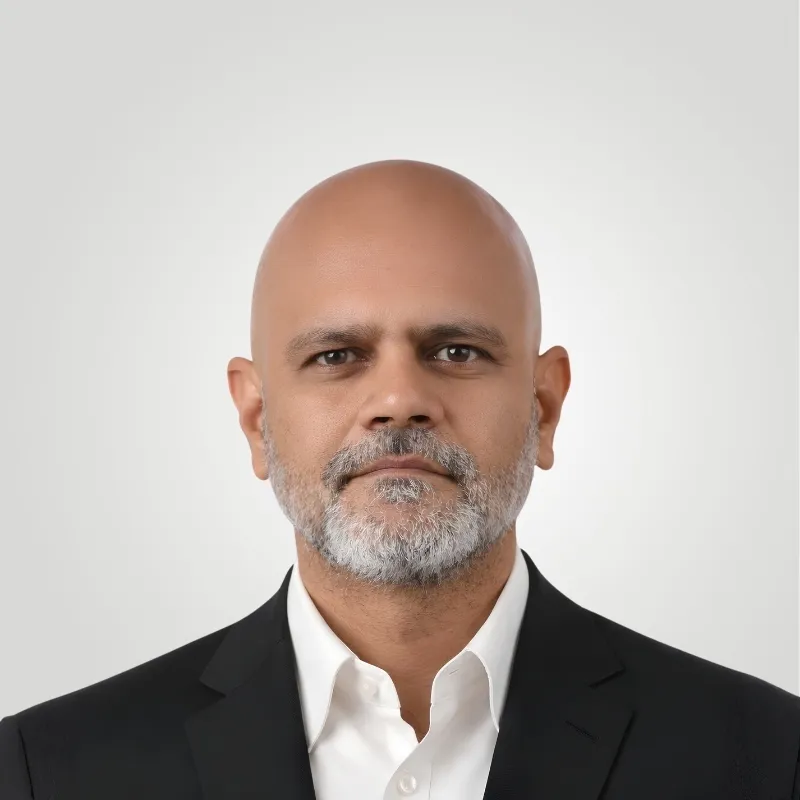
— Khalid Kabeer, Chief Product Officer, AdalFi


Comments
Share your thoughts. Comments require admin approval before appearing.
Leave a Comment